AI-Enhanced Cane: Product Design
for Assisted Mobility
GoMate
#Accessibility#Personalization#
Multimodal feedback#Design for seniors
Duration
6 Months
Softwares





Problem
• Seniors struggled with low motivation and inaccessible interfaces, and caregivers reported challenges like memory loss and reduced physical activity, highlighting the need for a more usable and supportive design.
• I conducted further research through an interview with Anita Hökelmann, a sports scientist at Otto von Guericke University, who shared key insights on motivating movement in seniors, especially those with dementia.
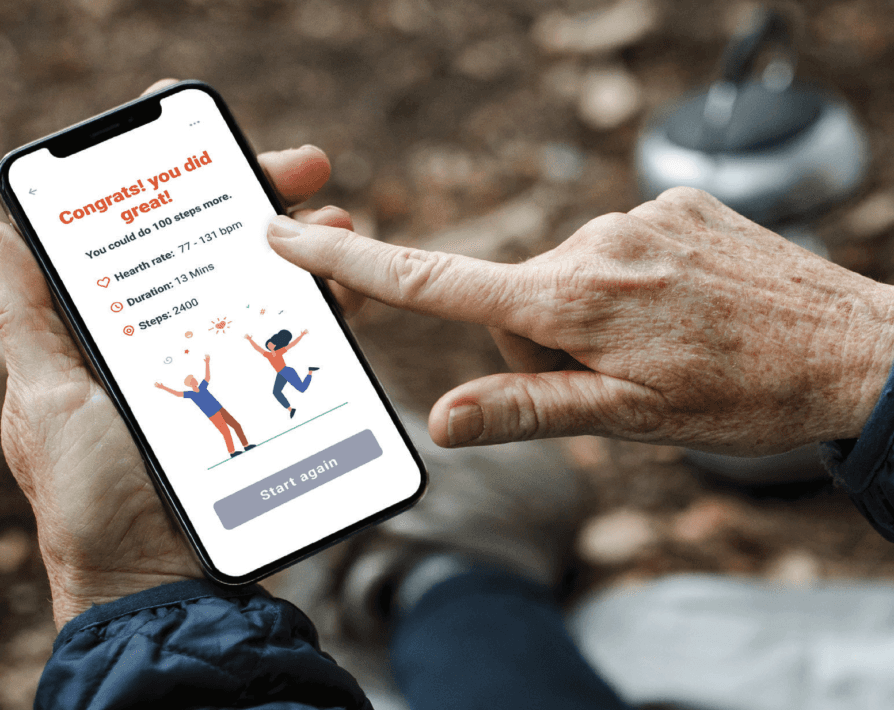
• Based on these findings, I designed a senior-friendly, AI-supported UI with clear navigation, large typography, and personalized motivational feedback to encourage regular movement and build confidence with technology.
Older adults generally show low levels of physical activity and motivation.
Overview
📋It all began with the title:
“Supporting Older Adults through AI-Driven Solutions”
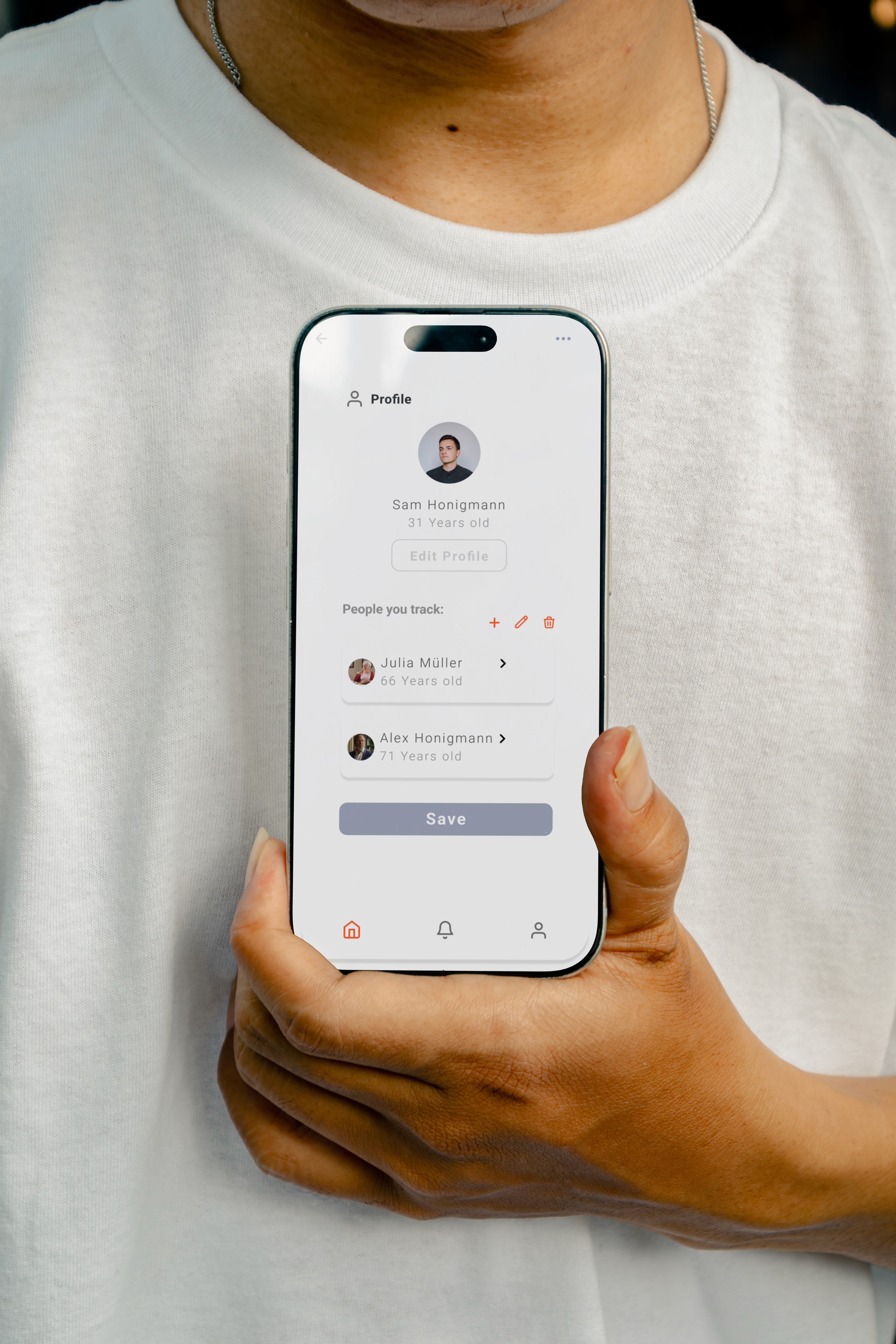
GoMate is a smart walking cane with AI designed to support seniors’ mobility and health while motivating physical activity. This required designing both the device interface and a companion app tailored for seniors and their family members, focusing on readability, clarity, and engagement.
Previously, seniors struggled with standard apps and devices, causing frustration and low adoption.
To address this, I designed a user-centered interface and interaction system, incorporating clear visuals, large fonts, and motivational feedback, enabling seniors to use the technology confidently and helping families track and support their loved ones’ activity
@FutureWheel
Research
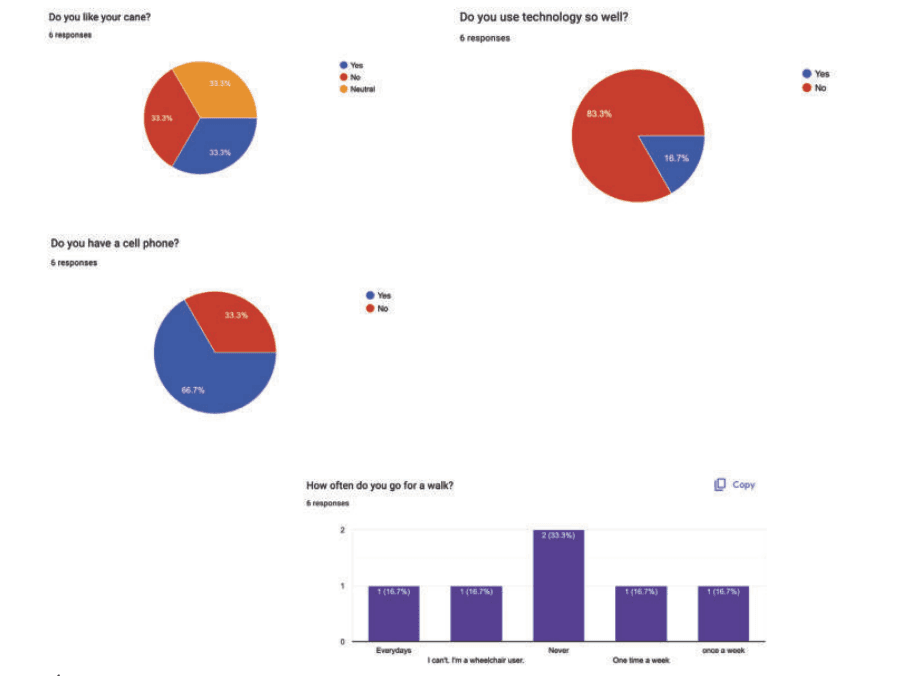
To better understand seniors’ daily habits and their relationship with technology, I conducted a short survey focused on mobility and digital usage.
The results revealed several important insights:
While most participants owned a mobile phone, not all of them felt confident using technology independently.
A significant portion reported difficulties when interacting with digital tools, highlighting low digital confidence.
Walking and physical activity varied greatly:
some participants walked daily
others reported limited or no walking activity
one participant relied on a wheelchair
The results indicated that physical ability, mobility, and technological familiarity differ strongly among older adults and should not be treated as a single, uniform behavior pattern.
These findings emphasized the importance of designing an interface that adapts to different physical conditions, supports low-tech confidence, and remains simple and accessible across varying usage levels.
83.3% of participants (n=06) reported difficulties using technology confidently.
66.7% of respondents (n=06) owned a mobile phone, yet many still struggled with independent usage.
33.3% of participants (n=06) reported no regular walking activity, indicating limited physical mobility.
@Quantitative research results
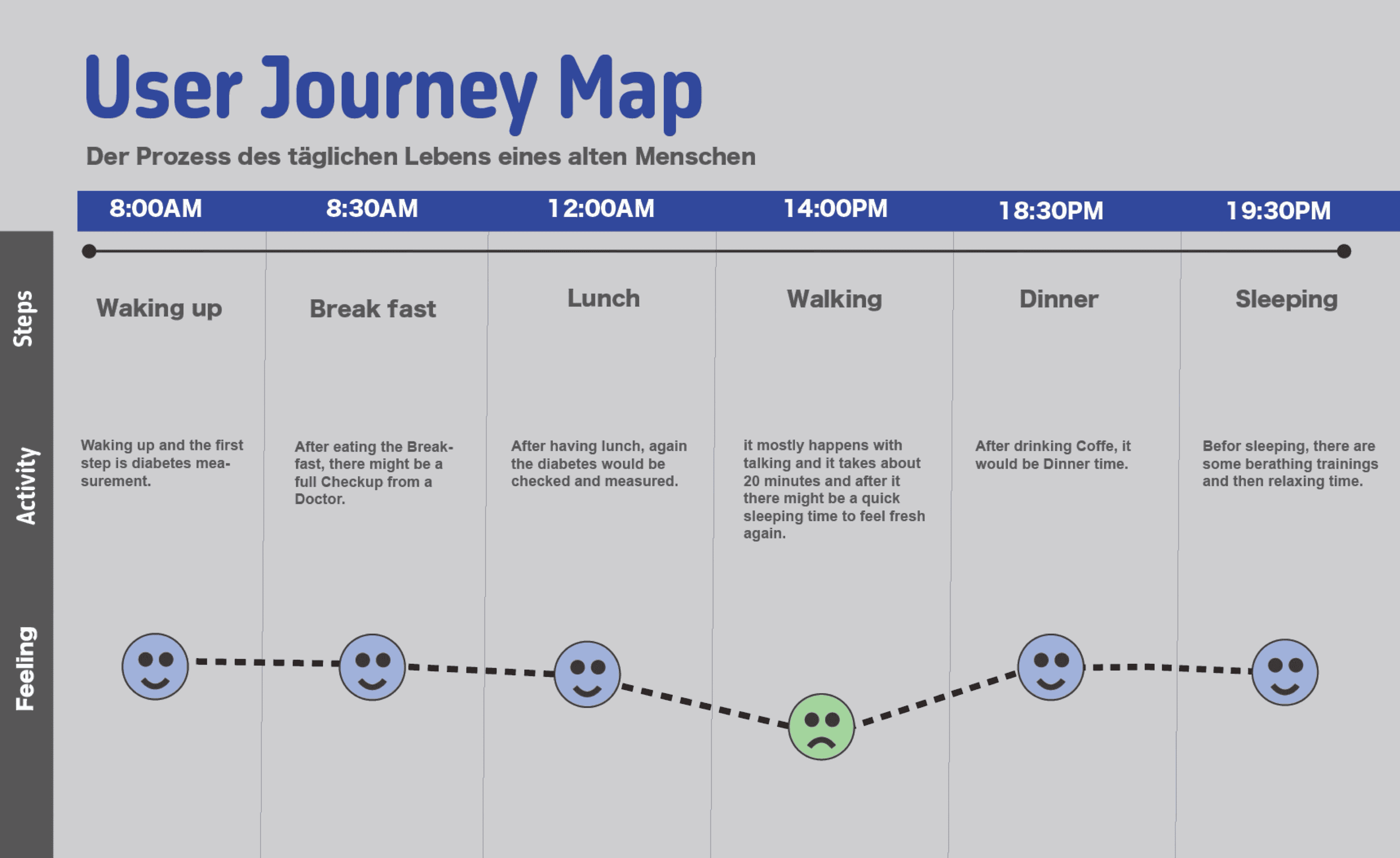
User Journey Map
As a second test, I conducted an interview with a caregiver from Bremen and, based on the insights, created a journey map of older adults living there.
During the interview and the development of the infographic, it became clear that many seniors show little motivation for physical activity and dedicate only a short portion of their day to walking.
@User Journey Map
Market Research
After reviewing the market, it became clear that only a limited number of technology-based applications and devices are designed specifically for older adults.
Platforms such as Televeda, Senior Planet, Carebase, and SeniorChatters address social connection, wellness, or education, but very few focus on creating truly senior-friendly user interfaces.
Compared to products developed for people with disabilities or other target groups, there has been significantly less investment in technology tailored specifically to seniors.
On marketplaces such as Amazon, several mobility aids with integrated apps or smart features are available; however, these products often lack visibility and effective promotion.
Limited marketing efforts and low investment appear to slow down innovation and adoption within senior-focused technologies.
Product Design
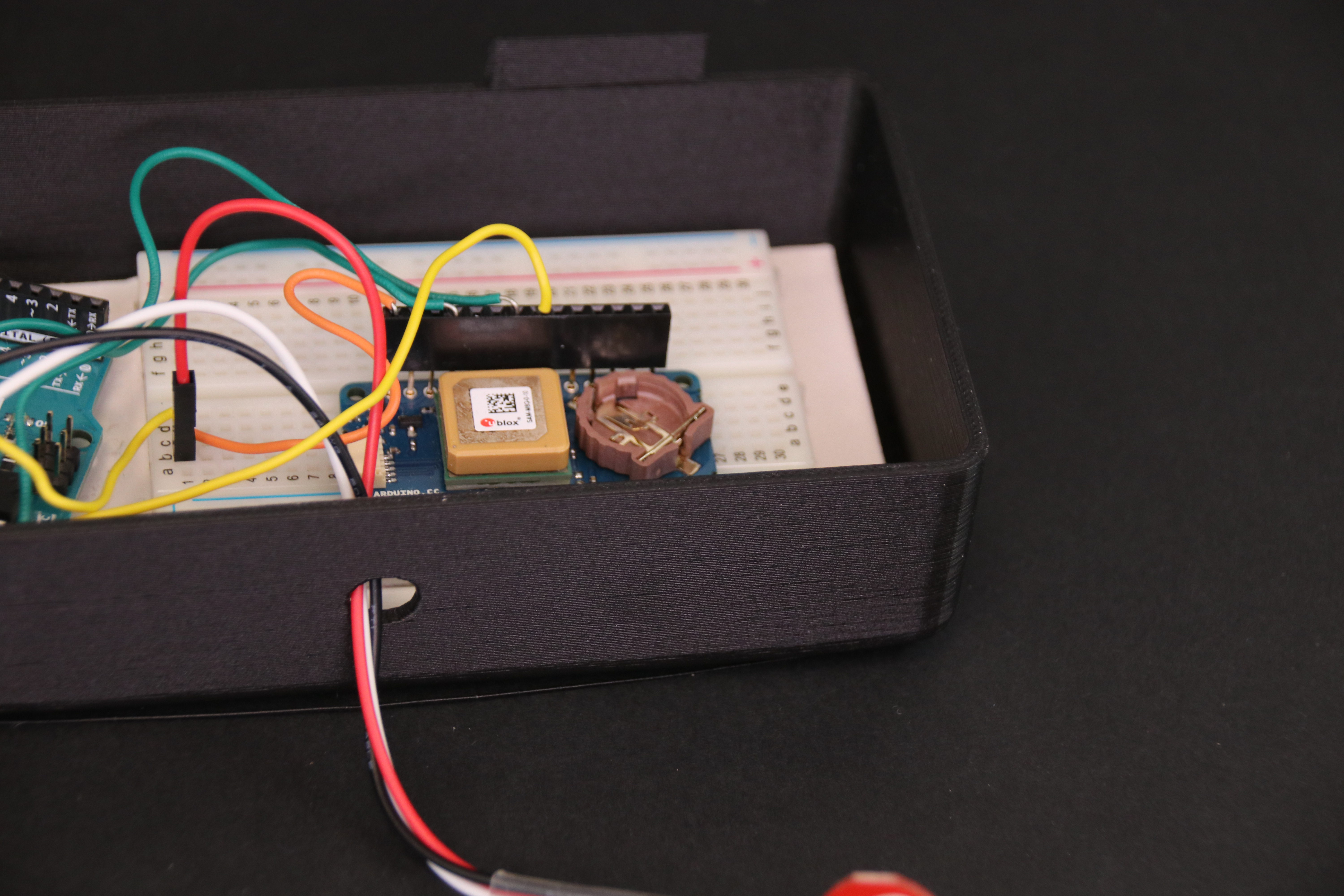
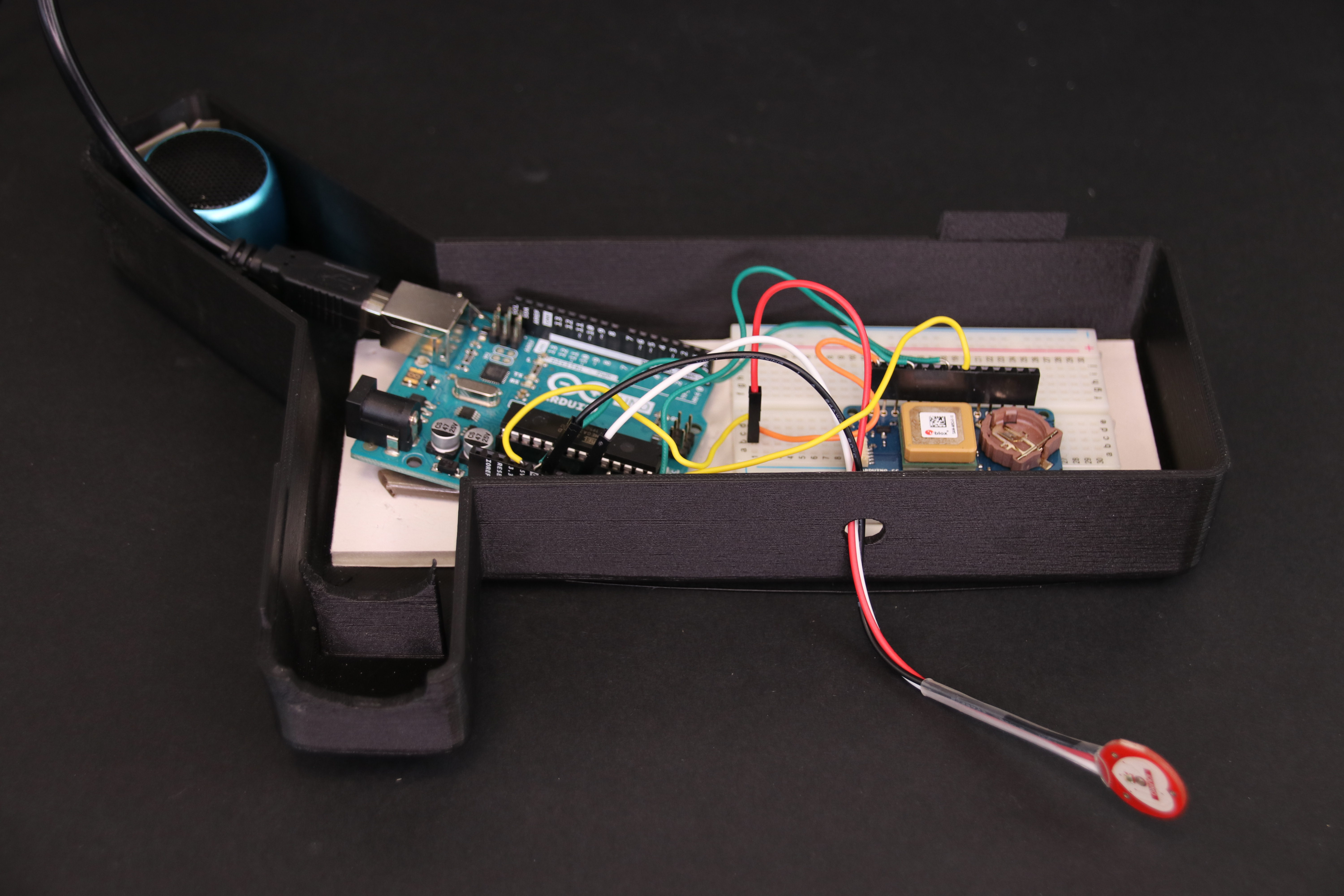
The first prototype of the GoMate walking Cane was produced using a Prusa MK3S+ 3D printer. The model included all required Arduino boards and electronic components.
The walking stick was designed in Shaper3D. After several alignment discussions with Valerius and Nils, the 3D model was converted into a printer-readable file. The full printing process took approximately 15 hours.
Once the Arduino components were placed inside the prototype, the final result was documented through photographs and prepared for presentation at the exhibition.
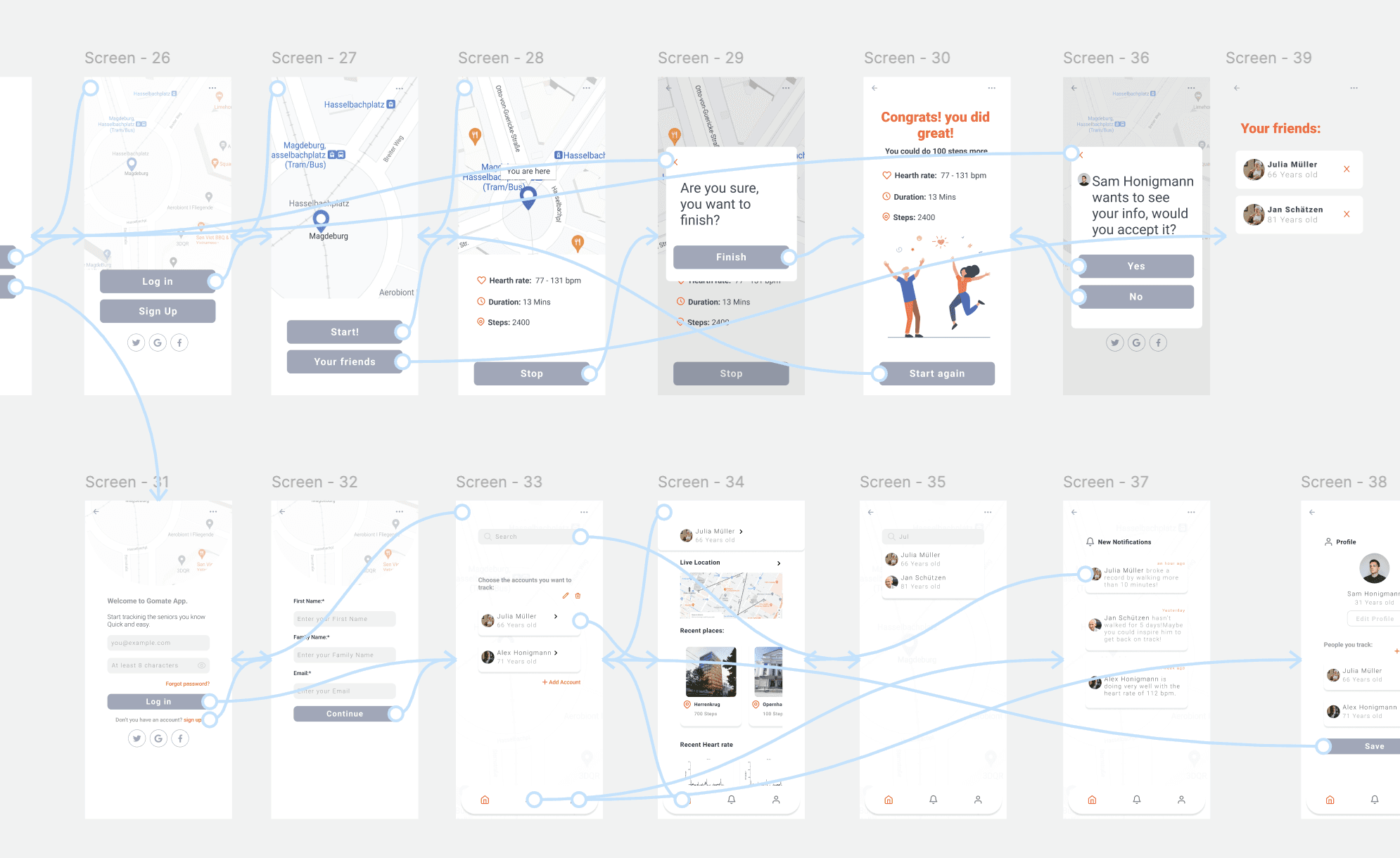
Another step involved designing the prototypes of the “Gomate” walking cane app. A key part of the user interface (UI) process was designing the app in Figma. The challenge was to create screens suitable for both seniors and their children, and to encourage both user groups to actively use the app.
The next step, and another interaction measure, was conducting an eye-tracking test to observe and evaluate users’ eye movements across the app screens. This test highlights areas of the user interface (UI) that attract the most attention. By understanding where users look first and where they spend the most time, designers can effectively prioritize content and features.
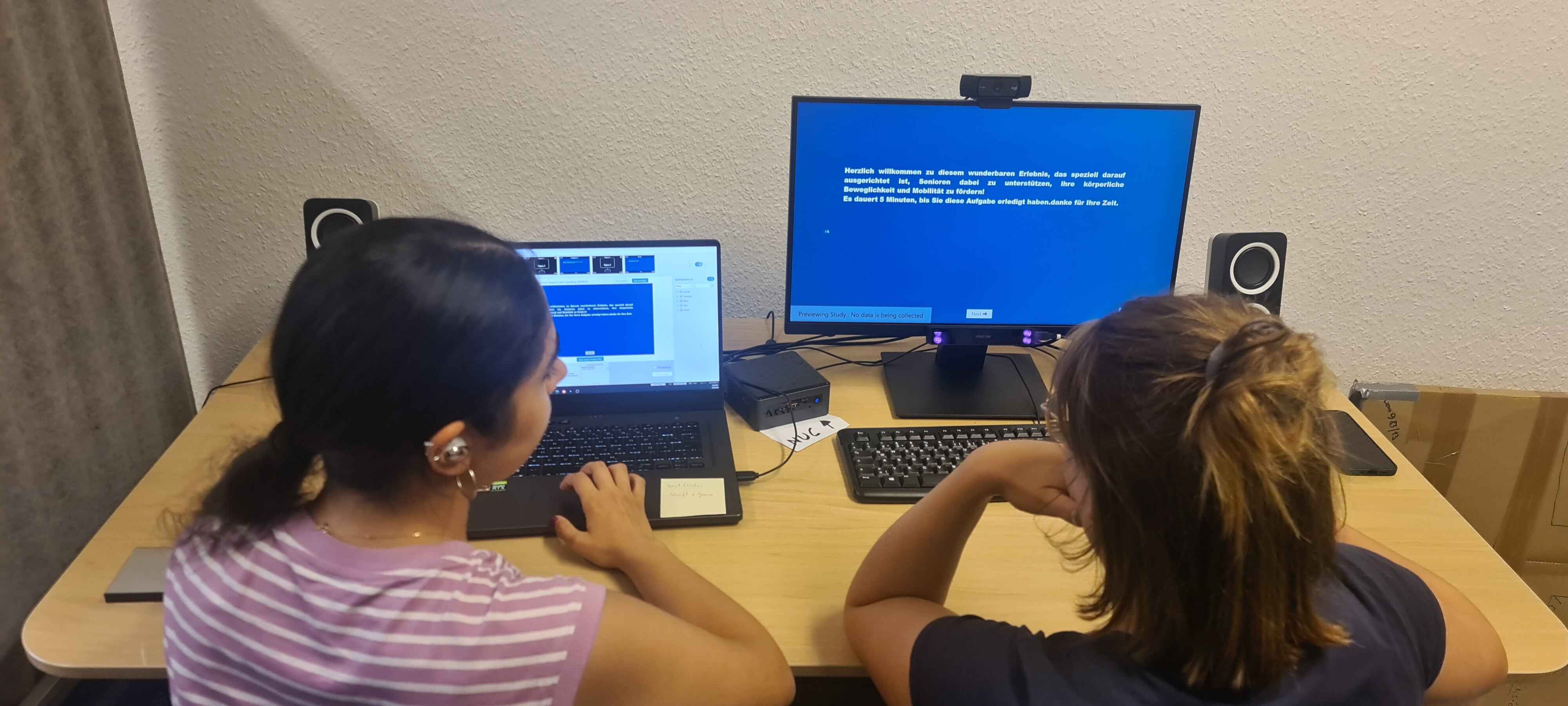
@eyetracking test
Conclusion
This project revealed several areas with strong potential for further development. The physical design of the walking stick can be refined by reducing its size and integrating all Arduino components more efficiently. Additional research on the base of the stick is essential to identify safer materials that can better protect older adults from slipping or falling.
On the digital side, further app testing is required to improve the UI/UX experience for both potential user groups. Insights from usability testing and eye-tracking studies should be incorporated to enhance clarity, accessibility, and overall interaction quality.
Despite these open points, the project demonstrates clear potential for real-world application and future production. For this reason, the product concept was submitted to several exhibitions, including PUSH UX 2023, as a step toward further development and public evaluation.